
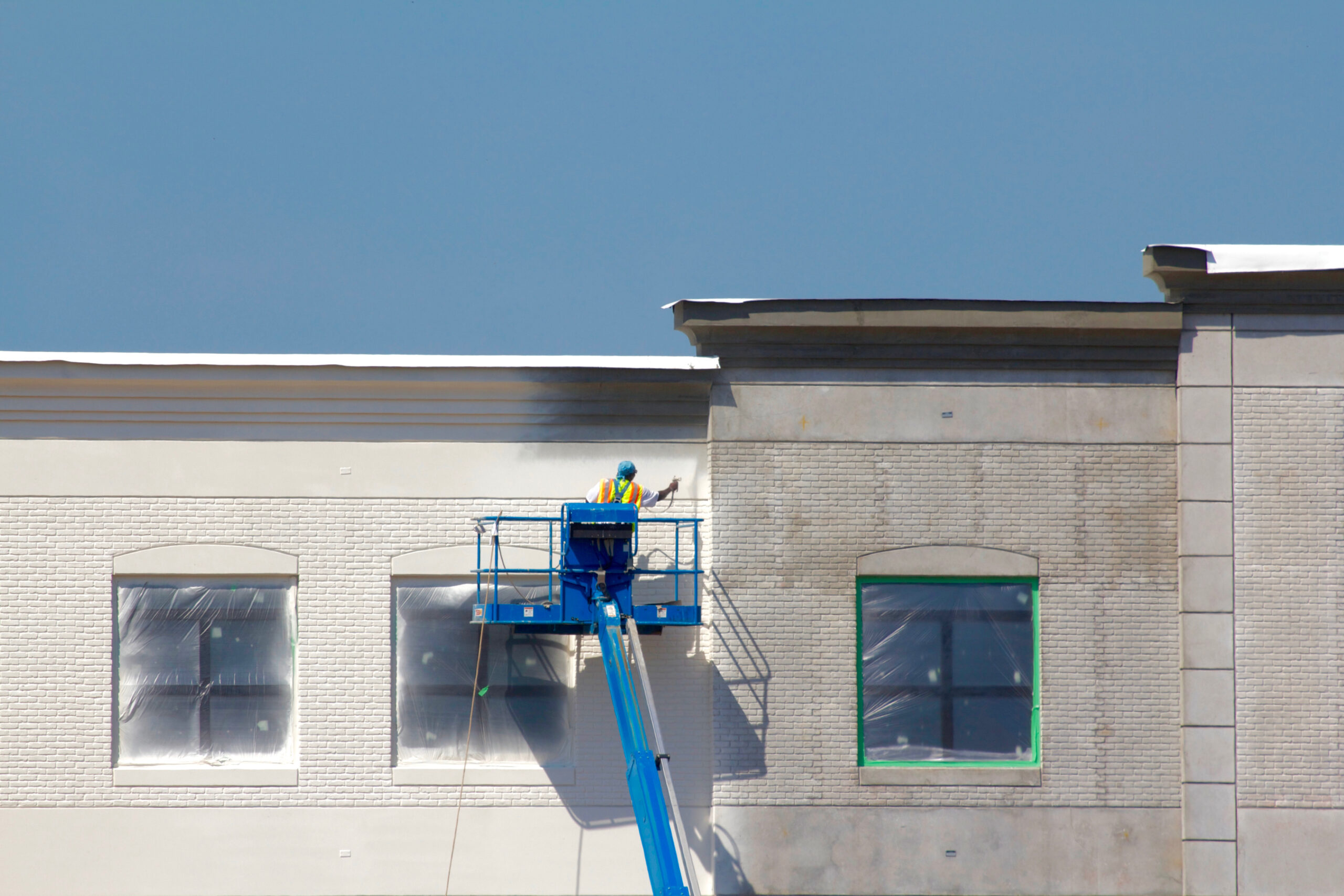
Commercial buildings on Long Island deal with a combination of weather conditions that can be tough on painted surfaces. Humid summers, coastal moisture, rain, salt carried through the air, strong sunlight, freezing winter temperatures, and repeated seasonal changes all affect exterior building materials.
For commercial properties in Nassau County, a successful paint job begins before anyone opens a can of paint.
Property managers and building owners need to think about temperature, humidity, moisture levels, surface conditions, and the forecast when scheduling exterior painting. Even interior commercial painting benefits from careful control of temperature, airflow, and humidity.
Understanding those conditions can help you choose a better time for your project and a coating system suited to your property.
Long Island’s Climate Creates Unique Painting Challenges
Nassau County’s proximity to the Atlantic Ocean and Long Island Sound contributes to higher moisture levels than many inland areas experience.
That moisture does not necessarily mean exterior painting is difficult. It simply means conditions need to be evaluated carefully.
Exterior walls, trim, masonry, metal components, and other surfaces need to be sufficiently dry before coatings are applied. Humidity can also affect how quickly paint dries and cures.
Add summer heat, direct sunlight, coastal winds, and winter freezes, and commercial buildings face a demanding environment throughout the year.
A coating that performs well starts with selecting the right product and applying it under conditions that meet the manufacturer’s requirements.
Temperature Is More Than the Number on the Forecast
Air temperature is one piece of the equation. Surface temperature can be just as important.
During summer, a commercial building exposed to direct afternoon sunlight may have exterior surfaces considerably hotter than the surrounding air. Dark masonry, metal, and previously painted surfaces can absorb a substantial amount of heat.
Paint applied to an excessively hot surface may begin drying too quickly. That can make maintaining a consistent wet edge difficult and may affect the finished appearance.
Commercial painters often schedule work according to sun exposure, tackling one elevation while it is shaded and moving to another part of the building as conditions change.
Cold temperatures create different limitations.
Many coatings have minimum temperature requirements for application and curing. While newer low-temperature products have extended the exterior painting season, winter conditions in Nassau County can still make certain projects impractical.
The coating specifications, surface temperature, daytime high, overnight low, and expected curing period all need to be reviewed before exterior work proceeds.
Nassau County Humidity Can Slow Things Down
Anyone who has spent an August afternoon on Long Island knows humidity can become substantial.
High humidity may slow the evaporation needed for certain coatings to dry and cure properly. When combined with damp surfaces, morning dew, or recent rain, it can also reduce the number of suitable painting hours available during the day.
This is one reason experienced commercial painters do not automatically begin exterior work first thing in the morning.
A building can look dry while still holding moisture.
Different materials also behave differently. Wood can absorb moisture. Masonry is porous. Metal may develop condensation when surface and air temperatures change.
Surface conditions should be evaluated before coating begins rather than relying solely on how the building looks.
Coastal Exposure Can Be Hard on Commercial Exteriors
Nassau County’s coastal environment adds another concern: salt.
Properties closer to the shoreline may experience salt deposits on exterior surfaces. Combined with moisture, salt can contribute to deterioration and corrosion, particularly on exposed metal.
Preparation becomes especially important on these properties.
Surfaces may require thorough cleaning before painting, and metal components may need rust removal, appropriate primers, and corrosion-resistant coating systems.
Simply painting over an existing problem may make the building look better temporarily, but it does little to address what is happening underneath.
Proper preparation gives the new coating a sound surface to bond to.
Choosing the Right Season for Exterior Painting
Long Island offers a reasonably long exterior painting season, but every part of the year requires a slightly different approach.
Spring brings moderate temperatures but also frequent rain and damp conditions. Exterior painting schedules may need some flexibility while surfaces dry between weather systems.
Summer offers long working days and many dry-weather opportunities. High humidity and hot, sun-exposed surfaces can complicate application during the hottest portions of the day.
Fall can provide some of the most comfortable conditions for exterior commercial work. Temperatures often become more moderate and humidity begins dropping. Later in the season, however, shorter days and colder overnight temperatures become factors.
Winter generally favors interior projects. Certain exterior coatings may be suitable during warmer winter periods, but temperature requirements and curing conditions need to be checked carefully before proceeding.
The best season ultimately depends on the building, coating system, exposure, scope of work, and property schedule.
Rain Doesn’t Always Mean Losing the Entire Project
Rain can interrupt exterior work, but a rainy week does not necessarily mean everything stops.
Commercial painting projects involve much more than applying finish coats. Depending on the building, crews may be able to continue with cleaning, scraping, sanding, repairs, masking, interior work, or other preparation while exterior surfaces dry.
After rainfall, there is no magic countdown that works for every property.
A sun-exposed metal surface may dry quickly, while shaded masonry or wood may retain moisture much longer. Humidity, temperature, airflow, and the amount of rain all affect drying.
The surface should dictate when painting resumes.
Interior Commercial Painting Can Be Scheduled Year-Round
Weather has much less control over interior painting, which makes indoor commercial projects a practical option throughout the year.
HVAC systems can maintain suitable temperatures, while dehumidification and ventilation can help manage moisture and airflow.
This makes winter particularly useful for interior maintenance.
Offices, retail locations, restaurants, medical facilities, apartment buildings, common areas, schools, warehouses, and other commercial spaces can often schedule interior work during slower operating periods or outside normal business hours.
Planning around occupancy is particularly valuable. Sections of a building can be completed in stages so employees, tenants, customers, and vendors can continue using other portions of the property.
Protective Coatings Add Another Layer of Defense
Paint is often part of a larger maintenance system for a commercial building.
Properties exposed to substantial moisture may benefit from coatings selected for water resistance. Masonry surfaces may require products designed specifically for porous substrates. Metal components may need rust-inhibiting primers and corrosion-resistant finish coatings.
Some buildings may also be candidates for elastomeric coatings. These products create a flexible protective film and can be useful on certain masonry and stucco applications where additional moisture protection is desirable.
Product selection should always be based on the actual substrate and building conditions rather than choosing a coating simply because it carries a “weather resistant” label.
Preparation Matters Even More in Difficult Weather
When conditions are less forgiving, surface preparation becomes even more valuable.
Commercial exterior surfaces may need pressure washing, scraping, sanding, rust treatment, repairs, caulking, or priming before finish coats are applied.
Skipping those steps to beat an approaching weather system rarely saves time in the long run.
A properly prepared surface gives the coating its best opportunity to adhere and perform through Long Island’s changing seasons.
That can mean waiting for morning dew to evaporate, moving away from a wall receiving intense afternoon sun, or postponing application when rain is approaching.
Good commercial painting is partly craftsmanship and partly timing.
Plan Your Nassau County Commercial Painting Project Before the Calendar Fills
The best time to start thinking about commercial painting is well before the building desperately needs it.
Early planning gives property owners and managers more flexibility to choose suitable weather, coordinate around tenants or business operations, address repairs, select appropriate coatings, and schedule the work during a practical window.
Excel Painting provides commercial interior and exterior painting services for businesses and commercial properties throughout Nassau County and surrounding Long Island communities. Our team can evaluate your building’s current condition, discuss the demands placed on its painted surfaces, and develop a project plan suited to the property.
If your building is showing fading, peeling, cracking, corrosion, staining, or other signs that its coatings are reaching the end of their service life, contact Excel Painting to schedule an evaluation and start planning your commercial painting project.
Recent Comments